BISP New Payment Details, Eligibility Check, Receiving Method

BISP New Payment and Registration Process
This article provides details about the BISP New Payment Details for new beneficiaries, including eligibility criteria, the process to check eligibility, steps to receive payments, and the registration process. It aims to assist low-income individuals in understanding the Benazir Income Support Program, initiated by the Government of Pakistan.
By reading this article, you’ll learn everything about the BISP New Payment Details, from registration to receiving financial assistance. Once registered, you can verify your application status, check your payment, and collect it.
To register, you need your CNIC, your children’s Bay Form (if applicable), and a mobile number registered in your name. Visit the nearest BISP office, where you’ll complete your registration via the NSER survey.
After registration, check your eligibility using the 8171 portal or SMS service. Upon confirmation, visit your nearest BISP cash center to collect your payment. The amount is Rs. 10,500, and the new payments will start in January 2025. Additionally, recipients of Benazir Taleemi Wazaif will receive an extra amount. All relevant details are provided in this article.
Read Also: BISP 13500 Rupee Payment Phase 2 Districts Wise Update
BISP New Payment Details Eligibility Check
The Benazir Income Support Program will distribute a new payment of Rs. 10,500 to eligible individuals, starting November 23, 2024. In addition, beneficiaries of Benazir Taleemi Wazaif will receive extra financial assistance.
The payment will be made available at designated BISP cash centers, ensuring that the most vulnerable families receive the support they need.
Read Also: Verify Benazir Kafaalat Payment Of Rs 13500 Via ID Card
Eligibility Criteria for BISP New Payment
To qualify for the BISP New Payment Details, you must meet the following eligibility criteria:
- Be a Pakistani citizen with a valid CNIC.
- Provide your children’s Bay Form (if applicable).
- Ensure your mobile number is registered with your CNIC.
- Register through the NSER survey conducted by BISP.
If you meet these criteria, proceed to check your eligibility and start the registration process to access financial assistance.
How to Check Your Eligibility for BISP New Payments
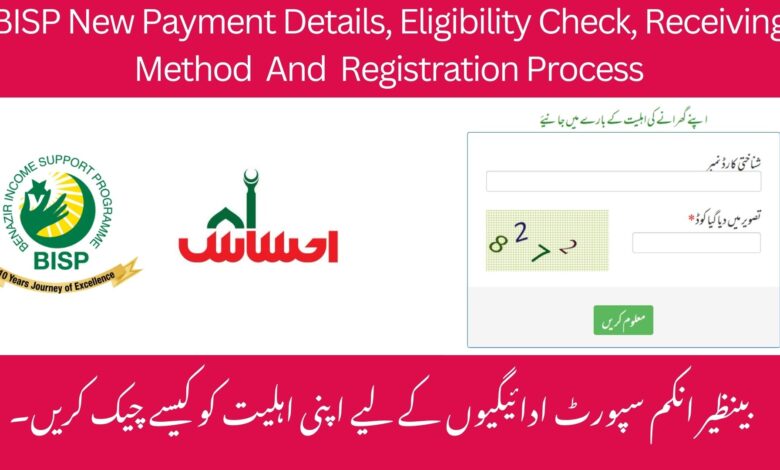
Follow these steps to confirm your eligibility for the BISP Rs 10500 payment:
- Online Check via 8171 Portal:
- Visit the official BISP website.
- Enter your CNIC number on the 8171 portal to verify eligibility.
- Check via SMS:
- Send your CNIC number via SMS to 8171.
- You’ll receive a reply with your eligibility status.
These simple methods allow you to confirm your status before proceeding to registration.
Read Also: BISP 10500 Tracking CNIC Verification Online Through 8171
Registration Process for New Beneficiaries
If you’re a new beneficiary, follow these steps to complete your registration:
- Gather Necessary Documents:
- Your valid CNIC.
- Bay Form for your children (if applicable).
- A registered mobile number.
- Visit a BISP Office:
- Go to the nearest BISP office or service center.
- Submit your documents and enroll in the NSER survey.
- Complete the NSER Survey:
- Provide household and financial information for eligibility review.
Read Also: Benazir Kafalat Stipend Latest Payment System Explained
How to Receive Your Payment
Once your registration is complete and eligibility is confirmed:
- Visit the nearest BISP cash center after the payment is released.
- Carry your CNIC and registered mobile number for verification.
- Upon successful verification, collect your Rs. 10,500 payment from the center.
Important Dates to Remember
- New Payments Begin: January 13, 2025.
- Eligibility Checks: Available anytime before the payment release date.
- Registration Deadline: Complete registration before payment distribution to ensure inclusion.
Read Also: BISP Rashan Riayat Program Registration Restarts In 2025
Conclusion
The BISP program continues to support Pakistan’s low-income households. By following the steps in this article, you can register, check eligibility, and receive the BISP New Payment Details Rs. 10,500 payment starting January 2025.
Ensure you have all necessary documents and visit the nearest BISP office to complete your registration. Stay updated by checking the official website or using the 8171 portal regularly.
Understanding the registration, eligibility, and payment process ensures hassle-free access to this vital support. Take advantage of the resources available to secure financial assistance for you and your family.